BuyUsedSaunas is an independent, reader-first guide to buying a sauna on the secondhand market — infrared cabins, traditional Finnish rooms, cedar barrels, and the foldable portable units that have crowded the listings in the last few years. We don't sell saunas and we take no manufacturer money, so the goal here is narrow: help you tell a good used buy from an expensive mistake. You'll find side-by-side comparisons of the main sauna types, an honest read on the 2025–2026 market, the places worth searching, a room-by-room inspection method, and what the research actually says about heat bathing and health.
A used sauna can be one of the better deals in home wellness, but it is not a risk-free one. The cabin shell — cedar, spruce, hemlock, or basswood — tends to age slowly and forgive a lot. The heater is the part that decides whether you've found a bargain or a project. Get the inspection right and the math usually works in your favor.
Why Buy Used?
The simplest argument for buying used is the discount. A new freestanding infrared cabin can run anywhere from roughly $1,500 to $15,000 depending on size and finish, and a cedar barrel or outdoor build commonly lands around $7,000 to $10,000 or more (typical 2026 ranges). On the secondhand market those same units sell for a condition-dependent discount off new — how much depends entirely on the unit's age, the heater's hours, and how badly the seller needs it gone. We don't quote a fixed percentage because the used market is too variable to pin one down honestly; a barely-used cabin from a relocating owner and a ten-year-old unit with a tired heater are not the same deal, even at the same asking price.
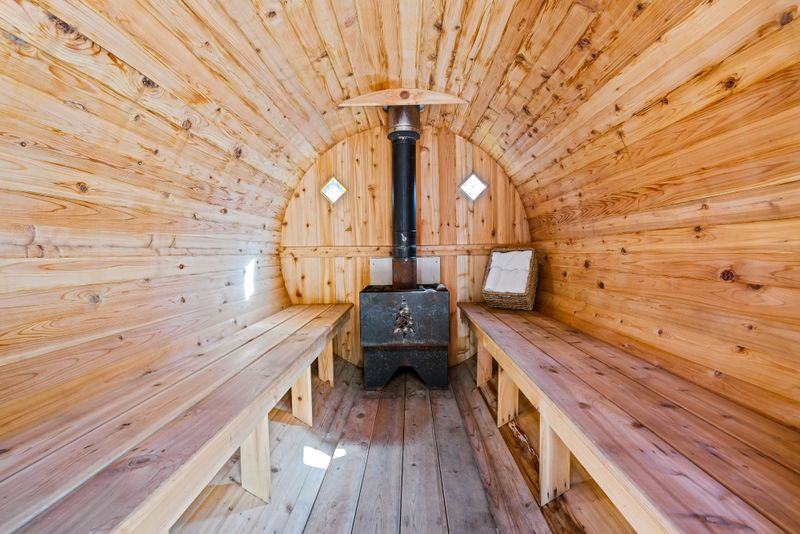
There's a second reason that has nothing to do with money. Saunas tend to get bought with enthusiasm and used less than the owner planned. That pattern is rough on the original buyer and good for you: a fair number of secondhand saunas are nearly new, installed once, and barely run. The cabin is sound, the wood still smells like cedar, and the heater has maybe a few dozen hours on it. Those are the listings worth chasing. Our cost comparison of new versus used walks through where the savings are real and where a low sticker price is hiding a coming repair.
The honest caveat: a sauna is a heated electrical appliance, and the heater is consumable. A traditional electric heater and its rocks have a service life, and infrared emitters degrade with use. Buy the cabin for its bones, but price the heater for its remaining life. That single distinction is the difference between a smart purchase and a money pit, and it's the thread that runs through everything else on this page.
Types of Used Saunas: A Buyer's Comparison
The word "sauna" covers a few genuinely different machines, and they don't age the same way or carry the same secondhand risk. Knowing which one you're looking at — and what tends to break on it — changes what you inspect and what you should pay.
Traditional Finnish saunas heat the room with an electric (or wood-burning) heater topped with stones, and they run hot: a traditional room typically holds 150 to 195°F, with UL recommending the temperature not exceed 195°F. You can throw water on the rocks for steam, which is the classic Finnish löyly. On the used market the cabin is usually the durable part. The heater is the question — older electric units lose efficiency, elements fail, and the stones break down and need replacing. A wood-burning stove adds a chimney and clearances to inspect. The upside is that a sound traditional sauna is a simple, repairable thing.
Infrared saunas skip the rocks and heat your body directly with infrared panels, so the cabin runs cooler, roughly 110 to 135°F. Panels use ceramic or carbon heating elements; both are common, and a buyer doesn't need to overthink the difference as long as every emitter still works. The thing to verify on a used infrared unit is exactly that — power it on and confirm each panel heats. Smaller cabins draw modestly, often around 1,200 to 1,600 watts on a standard 120V outlet, which makes them easy to relocate and re-plug. Our used infrared buying guide covers panel testing in more depth.
Barrel and outdoor cedar saunas — the cylindrical kind from makers like Dundalk LeisureCraft, built from western red cedar — are traditional saunas in an outdoor shell. They look great and the cedar holds up well to weather, but moving one is real work and outdoor units take more abuse: check the staves, bands, roof, and door seal. Note that "korral" shows up in searches without being a sauna brand or category. The name most likely traces to Korra Bath Ware, a Chinese maker of imported steam-shower cabins, though some sellers use the word for a corral-shaped barrel sauna. We cover the term and what to actually search for on our used "korral" saunas page.
Portable saunas are the budget entry point: foldable infrared tents and blankets, new in the range of about $200 to $2,000. They're the easiest used purchase because there's almost nothing structural to fail — fabric, a zipper, a heating element, a controller. Test the heater, check the seams, and you've covered most of the risk. If a full cabin is more than you want to commit to, our portable sauna buying guide and the page on whole-body portable units compare the formats.
One thing the dry-heat formats above won't give you is steam at the skin, which is what some buyers are really after. That's a different appliance — a steam generator in an enclosed shower rather than a stone-topped heater in a wood room — and worth understanding before you commit to a used sauna that can't deliver it. If wet heat is the goal, read how a steam shower combination compares to a traditional sauna's water-on-rocks löyly, because the two get conflated in listings and they aren't interchangeable.
| Sauna type | Operating temp | Typical new price (2026) | Main used-buying risk |
|---|---|---|---|
| Traditional Finnish (electric) | 150–195°F | ~$3,000–$6,000 (prefab indoor) | Heater age, failed elements, spent stones |
| Infrared cabin | ~110–135°F | ~$1,500–$15,000 | Dead or weak emitter panels |
| Cedar barrel / outdoor | 150–195°F | ~$7,000–$10,000+ | Weather wear, hard to move, door/roof seal |
| Portable infrared (tent/blanket) | ~110–135°F | ~$200–$2,000 | Heating element, fabric, zipper, controller |
| Custom build | Varies | $10,000+ | Non-standard parts, unknown wiring quality |
The Home Sauna Market in 2025–2026
Two trends shape what's available secondhand right now. First, a wave of pandemic-era home-wellness buying put a lot of saunas into basements and backyards, and a chunk of those owners have since moved, downsized, or simply stopped using them. That's good supply for a patient buyer. Second, the format mix has shifted hard toward infrared and portable units, because they're cheaper to make, easier to ship, and run on a normal outlet. The result is a used market that's heavier on infrared cabins and foldable tents than it was a decade ago, with traditional Finnish and barrel saunas showing up less often and holding value better when they do.
Pricing on the secondhand side stays stubbornly local. A sauna is heavy and awkward to transport, so what a unit sells for depends a lot on whether a buyer happens to live within driving distance. A barrel sauna two states away might sit unsold at a fair price simply because nobody nearby wants to rent a trailer for it. That works for and against you: be ready to travel for the right unit, and be ready to negotiate hard on anything a seller can't easily ship.
The names you'll run into are worth knowing, because brand tells you something about parts and repairability. Harvia is a major Finnish heater and sauna maker, and it owns Almost Heaven Saunas (a West Virginia company it acquired in 2019). Finnleo, Helo, and Tylö all sit under Sauna360, the company formerly known as TyloHelo. For outdoor cedar barrels, Dundalk LeisureCraft out of Ontario is a well-established maker. A used unit from an established brand is easier to keep running than an unmarked custom build, because replacement heaters, elements, and rocks are still available.
Where to Find Quality Used Saunas
The best listings come from the channels where ordinary owners sell, not from resellers. Local classifieds and marketplace apps — Facebook Marketplace, Craigslist, OfferUp and the like — are where you'll find the relocating-homeowner sauna at a real discount. These are also where you can actually go see and run the unit before paying, which for a sauna matters more than for almost any other appliance. A photo can't tell you whether the heater holds temperature or whether a panel is dead.
Estate sales and home-clearance sales are a quieter source and often a cheaper one, since the sellers are usually settling an estate rather than chasing top dollar. Auction sites widen the pool but reintroduce the shipping problem and remove your chance to inspect in person, so they suit portable units and small infrared cabins better than heavy barrels. Manufacturer-refurbished or open-box stock, where a brand sells it directly, costs more than a private sale but comes with some assurance the unit was checked over.
Wherever you buy, two rules hold. See it powered on before you commit, and factor transport into the price from the start — a great deal an unmovable distance away is not a great deal. Our used sauna buying checklist is built to take with you to a viewing.
How to Inspect a Used Sauna Before You Buy
An inspection is mostly about catching the expensive problems before they become yours. Work through the heater, the wood, the electrical, and the safety details, in roughly that order of cost.
Start with the heater, because it's the costliest thing to replace. Run it. A traditional electric heater should climb steadily toward its operating range; sluggish or uneven heating points to aging elements. Check the stones — cracked, crumbling, or fused rocks are cheap to replace but a sign the heater has seen heavy use. On an infrared cabin, turn it on and confirm every panel warms up, since a dead emitter is a real repair. InterNACHI, whose inspectors document sauna condition for a living, treats the heater and its wiring as the heart of the unit, and so should you.
Then read the wood. Saunas are built from decay-resistant species — western red cedar, redwood, cypress, spruce, hemlock, Douglas fir — and those hold up well, but look for soft spots, dark water staining, warping, or any musty smell that suggests trapped moisture and rot. Surface discoloration from heat and use is normal and cosmetic. Structural softness is not. Cedar that still carries its aroma is a good sign the wood is sound.
Check the electrical honestly, and bring in help if you're unsure. Small infrared cabins often run on a standard 120V/15A outlet, but larger infrared rooms and most traditional electric heaters (roughly 3 kW and up) need a dedicated 240V circuit — typically 30A or 40A on 10 or 8 AWG wire. Code essentials matter here: there should be a disconnect within sight of the heater, the equipment should be listed (UL, ETL, or CSA), and outdoor or wet installations require GFCI protection under the National Electrical Code. Don't guess at wiring. A licensed electrician should handle any 240V connection, and the cost of that work belongs in your purchase math.
Finish with the safety details that are quick to check and cheap to fix. The door should swing outward and have no latch, so a bather can always push out — that's an egress requirement, not a preference. Confirm there's a low air inlet near the heater and a high outlet on the opposite wall for ventilation; ceiling height usually runs about 6.5 to 7.5 feet. None of these are dealbreakers on their own, but a unit that gets the basics wrong tells you something about how it was built and maintained.
Sauna Health Benefits: Why the Investment Is Worth It
The case for heat bathing rests on real research, and it's worth stating precisely rather than overselling it. The most-cited study is Laukkanen and colleagues' 2015 paper in JAMA Internal Medicine, a prospective cohort that followed 2,315 Finnish men aged 42 to 60 for a median of about 20.7 years. The men who used a sauna most often — four to seven sessions a week — had markedly lower rates of fatal cardiovascular events and all-cause mortality than those who went once a week, roughly 40% lower all-cause mortality at the highest frequency. That's a striking association.
The honest qualifications matter as much as the headline. This was an observational study, so it shows association, not proof that saunas cause longer life — frequent bathers may differ in other ways. The participants were all men, and the sauna in question was the traditional Finnish dry sauna, not a steam room, hot tub, or infrared cabin. A 2018 review in Mayo Clinic Proceedings surveyed the broader evidence and reached cautiously favorable conclusions, which is reassuring, but the strongest single dataset still carries those limits. Our overview of sauna health benefits and the question of whether daily sauna bathing is good for you go deeper on what the research supports.
Heat bathing also isn't for everyone, and the secondhand price doesn't change the medical picture. High heat widens blood vessels and transiently lowers blood pressure; saunas appear safe for people with stable heart disease but are not advised for unstable or high-risk heart conditions, recent heart attack, severe aortic stenosis, or uncontrolled hypertension. Cleveland Clinic specifically cautions against infrared use during pregnancy, with multiple sclerosis, during acute illness, or while trying to conceive, and warns about dehydration — hydrate before and after. If you have any health condition, talk to your physician before you start, and read our risk disclosure. The research is encouraging; it is not a substitute for medical advice.
Frequently Asked Questions
How much can I save buying a used sauna vs new?
Used saunas sell at a condition-dependent discount off the new price, but there's no reliable fixed percentage — the used market is too local and too variable to promise one honestly. A nearly-new cabin from a relocating owner saves you far more than an aging unit with a tired heater, even at a similar asking price. For context, new freestanding infrared cabins run roughly $1,500 to $15,000 and cedar barrels around $7,000 to $10,000 or more (typical 2026 ranges); a fair used buy comes in meaningfully under new, with the exact gap set by age, heater hours, and how motivated the seller is.
What should I inspect when buying a used sauna?
Lead with the heater, because it's the most expensive part to replace. Run it and confirm it heats steadily; on an infrared unit, check that every panel warms. Then read the wood for soft spots, water staining, or a musty smell, and verify the electrical — small infrared cabins use a 120V outlet, but traditional heaters need a dedicated 240V circuit. Finish with the safety basics: a door that swings outward with no latch, and proper low-inlet, high-outlet ventilation.
Where is the best place to find used saunas for sale?
Local classifieds and marketplace apps tend to have the best private-seller deals, and they let you see and run the unit before paying — which for a sauna is essential. Estate and home-clearance sales are a quieter, often cheaper source. Auction sites and manufacturer open-box stock widen the pool but trade away your chance to inspect in person, so they fit portable and small infrared units better than heavy barrels.
Is an infrared sauna or traditional sauna better for buying used?
It depends on what you want from the heat and how much you want to move. Infrared cabins run cooler, plug into a standard outlet, and are easy to relocate, but you have to confirm every emitter panel still works. Traditional Finnish saunas run hot and give you real steam, and the cabin tends to be durable — the catch is the heater and stones, which wear and may need replacing. Neither is universally "better"; an infrared cabin is the simpler move, a sound traditional sauna the more classic experience.
How do I know if a used sauna heater needs replacement?
Power it on and watch how it behaves. A traditional electric heater that warms slowly or unevenly, or won't reach its normal operating range, is showing its age — and cracked or crumbling stones confirm heavy use. On an infrared cabin, a panel that stays cool while others heat means a dead emitter. A heater that trips a breaker or smells of burning during the test should be treated as a replacement, and that cost belongs in your offer before you agree to anything.
Can I move a used sauna myself or do I need professional help?
That comes down to size and type. Portable tents and small infrared cabins are genuinely DIY-movable. A full traditional room or a cedar barrel is heavy, awkward, and often needs partial disassembly, so plan for help, the right vehicle, and possibly a trailer. The electrical reconnection is separate from the move: anything on a 240V circuit should be wired by a licensed electrician at the new location, never improvised.
Are used saunas safe to buy for health use?
A used sauna can be perfectly safe once you've confirmed the heater works, the wiring meets code, and the door and ventilation are correct — buying secondhand doesn't lower the safety bar, it just means you do the verification the manufacturer would have. The bigger question is personal: high heat isn't advised for people with unstable heart disease, recent heart attack, severe aortic stenosis, or uncontrolled hypertension, and infrared use carries its own cautions around pregnancy and acute illness. Check with a physician before you start if you have any health condition.
What is the resale value of a sauna if I want to sell it later?
Saunas hold value reasonably well when they're from an established brand and the heater still has life left, because those are the units a buyer can keep running. An established name like Harvia, Almost Heaven, Finnleo, Helo, Tylö, or Dundalk LeisureCraft is easier to resell than an unmarked custom build, since parts are available. Working in your favor when you sell — and against you when you buy — is the transport problem: a heavy unit's value drops fast for anyone who can't easily haul it, so buying one that's local to a future buyer pool helps you recover more later.
BuyUsedSaunas is reader-supported and editorially independent; we accept no manufacturer sponsorship or paid placement, and this article is general information, not professional electrical, installation, medical, or safety advice — always follow your sauna and heater manufacturer's instructions, use a licensed electrician for any wiring, and consult a physician before heat bathing if you have a health condition.
Authoritative sources & references
Editorially reviewed: August 22, 2026