What Saunas Cost: New vs Used
What You'll Learn
- New sauna prices in 2026 span a wide band: portable infrared blankets and tents run roughly $200 to $2,000, freestanding infrared cabins land around $1,500 to $15,000, an entry traditional indoor electric prefab sits near $3,000 to $6,000, and a cedar barrel or outdoor build climbs to $7,000 to $10,000 or more.
- Used saunas sell at a condition-dependent discount off those new prices. How steep that discount runs depends on the model, the heater's health, and how the unit was stored, not on a fixed percentage.
- The heater is the part that decides whether a used sauna is a bargain or a money pit. A worn-out electric element or a sun-rotted cabin can erase the savings fast.
- Small infrared cabins commonly draw about 1,200 to 1,600 watts on a standard 120V/15A circuit. Larger infrared rooms and most traditional electric heaters from roughly 3 kW up need a dedicated 240V circuit, which is where installation cost concentrates.
- Heater sizing follows a simple rule: about 1 kW per 45 cubic feet of interior volume, rounded up to the next catalog size.
- The heat therapy itself is identical whether the cabin is new or secondhand. A 2015 study in JAMA Internal Medicine linked frequent sauna bathing with lower cardiovascular and all-cause mortality, and a used unit delivers the same session as a new one.
Most people shopping for a home sauna run into the same fork in the road. A brand-new unit arrives clean, warrantied, and ready to wire. A used one costs far less but carries questions the listing photos never answer. Both paths can be right. The trick is knowing where the money actually goes, because the sticker price is only the first number in a longer equation that includes wiring, running costs, and the odd repair.
This page lays out what saunas cost in 2026, new and used, across the main categories: portable infrared, freestanding infrared cabins, traditional indoor electric prefabs, and cedar barrel or outdoor builds. The price ranges below are typical 2026 ranges for new equipment. Used prices stay deliberately general, because what a secondhand sauna fetches depends on its specific condition far more than on any tidy rule of thumb. A barrel sauna left under a tarp through three Minnesota winters is a different purchase than the same model kept in a finished basement.
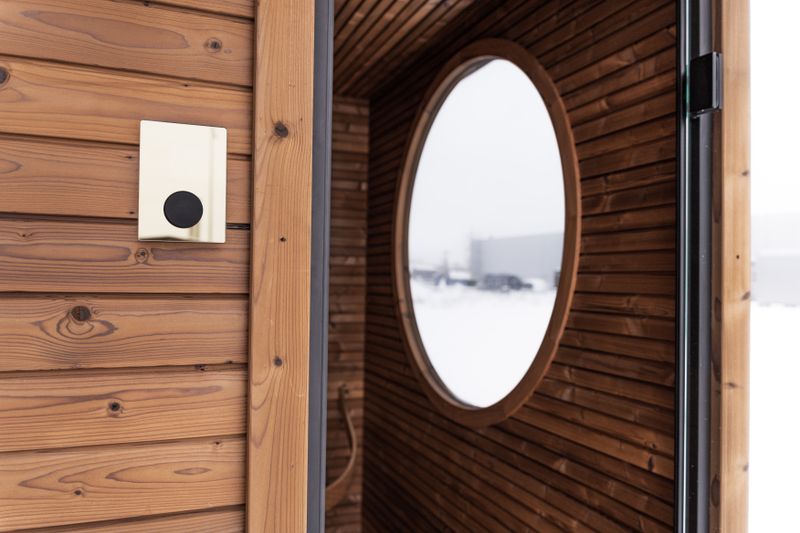
Settle one thing early: a used sauna does not give you a watered-down experience. The wood, the heat, and the health effects researchers have measured behave the same whether you paid full retail or found the unit on a local marketplace. What changes is the risk profile and the warranty, not the therapy.
2026 Sauna Price Ranges: New vs Used
New sauna prices cluster by type. Portable infrared options sit at the bottom: foldable blankets and pop-up tents run from a couple hundred dollars to around $2,000. They plug into a normal outlet and ask nothing of your electrician, which is half their appeal. Freestanding infrared cabins, the kind that seat one to four people in a fixed wooden box, range from about $1,500 at the low end to $15,000 for larger or premium rooms. Traditional indoor electric prefabs, the heated-rock saunas most people picture, start near $3,000 and run to roughly $6,000 for an entry unit. Cedar barrel and outdoor saunas, often built from western red cedar by makers such as Dundalk LeisureCraft, generally start around $7,000 and pass $10,000 once you add a larger footprint or a wood-fired stove. Fully custom builds begin at $10,000 and go wherever the design takes them.
| Sauna type | Typical 2026 new price range | Used market |
|---|---|---|
| Portable infrared (blanket / tent) | $200 – $2,000 | Modest discount; condition-dependent |
| Freestanding infrared cabin | $1,500 – $15,000 | Discount off new, depends on hours of use and element health |
| Traditional indoor electric prefab | $3,000 – $6,000 | Discount off new, heater age is the swing factor |
| Cedar barrel / outdoor | $7,000 – $10,000+ | Discount off new, weather exposure drives the price down |
| Custom build | $10,000+ | Rare on the used market; valued case by case |
The used column stays qualitative on purpose, because secondhand prices were not consistently verifiable across the market and a made-up depreciation percentage would do you no favors when you are standing in someone's backyard judging a real unit. The pattern that does hold: the bigger and more weather-exposed the sauna, the steeper the discount a used buyer can usually negotiate, since outdoor exposure is hard to assess and easy to underestimate. A portable infrared blanket barely depreciates because there is so little to go wrong. A six-year-old outdoor barrel might sell for a fraction of new, but the savings only count if the heater and the staves are sound. Our used-sauna buying checklist walks through what to inspect before you hand over cash.
Total Cost of Ownership: A 5-Year Comparison
Sticker price misleads. The real comparison runs over years and folds in three things the price tag ignores: electricity, repairs, and the warranty value you give up by buying used. Over a five-year horizon, a used sauna usually comes out ahead, but the margin is narrower than the upfront discount suggests, and it can flip if the heater fails early.
Buy used and you save real money on day one, often enough to fund the wiring and then some. That savings is the strongest argument for going secondhand. Against it sits the warranty you forfeit, the higher odds of a repair, and the chance that an aging heater needs replacing sooner than a new one would. Running costs, by contrast, barely differ between a new and used unit of the same type and size, since electricity use depends on heater wattage and how often you bathe, not on who owned the cabin first.
Because the secondhand market is not standardized, no honest five-year table can quote a single used price. The chart below instead anchors the decision in what new equipment costs by type in 2026; a used unit then sits at a condition-dependent discount off the relevant range, and whether that discount holds up over five years depends mostly on the heater and how the cabin was stored.
Two honest caveats keep this from being a slam dunk. First, a used heater is the wild card. Replace one early and the savings shrink. Second, warranty coverage has real value if something goes wrong in year one or two, and used buyers usually have none. BuyUsedSaunas recommends treating the five-year number as a planning estimate, then stress-testing it against the specific unit in front of you. A used sauna with a recently replaced heater and documented service history is a very different bet than one with an original element of unknown age.
Running Costs: Electricity by Sauna Type
Electricity is the cost that never stops, so it deserves more attention than it usually gets. Two variables drive it: the heater's power draw and how long you run it. Infrared cabins are the efficient end of the spectrum. They heat the body directly rather than the whole room, run cooler at around 110 to 135°F, and reach temperature faster, so a session pulls less total energy. Traditional Finnish saunas run hotter, between 150 and 195°F, and heat a mass of rocks and air, which means a longer warm-up and more draw per session.
Heater size sets the ceiling on consumption. Small infrared cabins commonly run on about 1,200 to 1,600 watts from a standard 120V/15A circuit. Larger infrared rooms and most traditional electric heaters, from roughly 3 kW up, need a dedicated 240V circuit. A bigger heater costs more to run per hour, but it also reaches temperature faster, so the two effects partly cancel. The honest answer for most households is that a home sauna adds a noticeable but manageable line to the power bill, in the range of other major appliances, and the figure tracks heater kW and weekly use rather than the cabin's age or resale history.
| Type | Operating temperature | Typical circuit | Relative energy per session |
|---|---|---|---|
| Portable infrared | ~110 – 135°F | 120V / 15A standard outlet | Lowest |
| Freestanding infrared cabin | ~110 – 135°F | 120V for small units; 240V for larger | Low |
| Traditional electric (Finnish) | 150 – 195°F | Dedicated 240V (30A or 40A) | Higher |
If running cost is your main worry, an infrared cabin is the more economical choice session for session, and a whole-body portable sauna is cheaper still to operate because it plugs into an ordinary outlet. The trade-off is heat character: infrared delivers a gentler, drier warmth, while a traditional rock heater gives the steam-and-löyly experience that purists want. Neither running cost depends on whether you bought the unit new.
What Drives Used Sauna Prices Up or Down
Used sauna values move on a handful of factors, and learning to read them is what separates a good secondhand buy from a regret. The heater leads the list. An electric element is the single most expensive component to replace, so a unit with a young, working heater holds its value while one with a tired or unknown-age element should sell for less. Always ask how old the heater is and whether it has been serviced.
Wood condition comes next, especially outdoors. Western red cedar, the most popular sauna wood, resists moisture, stays dimensionally stable, and keeps cool to the touch, which is why it commands a premium new and ages better used. Nordic spruce is the traditional Finnish choice. Basswood, aspen, and hemlock are low-aroma, low-resin options that scent-sensitive bathers often prefer. On a used outdoor barrel, check the staves and the bands for rot, warping, and rust, because weather exposure is the fastest route to a discounted price.
Brand matters because it shapes both quality and the odds of finding parts. Harvia, a Finnish maker, owns Almost Heaven Saunas, which it acquired in 2019; Almost Heaven itself dates to 1977 in West Virginia. Finnleo, Helo, and Tylö all sit under Sauna360, the company formerly known as TyloHelo. Dundalk LeisureCraft, a family-owned Ontario maker founded in 2004, builds the western-red-cedar barrels common on the outdoor market. Units from established makers like these tend to hold value better and keep replacement heaters and parts available, which matters more on a used purchase than a new one.
| Value factor | Pushes price up | Pushes price down |
|---|---|---|
| Heater | Recent or recently serviced element | Original element of unknown age, signs of failure |
| Wood / cabin | Sound cedar, stable joints, kept indoors or covered | Rot, warping, rusted bands, heavy weather exposure |
| Brand | Established maker, parts available (Harvia, Finnleo, Tylö, Dundalk) | Unknown brand, no parts source |
| Completeness | Original manual, rocks, accessories, service records | Missing components, no documentation |
Completeness rounds out the picture. A unit that arrives with its manual, its rocks, its accessories, and a record of service is worth more than a bare cabin, both because it signals a careful owner and because it spares you the hunt for missing pieces.
Where to Find Used Saunas
Used saunas surface in a few predictable places, each with its own tradeoffs. Local classified marketplaces are the most common source. Prices there tend to be negotiable, and buying locally lets you inspect the unit and avoid shipping a heavy cabin across the country, which can cost as much as the discount you negotiated. The downside is that selection is luck of the draw, and you are usually buying as-is from a private seller with no recourse.
Estate and moving sales occasionally turn up saunas from owners who need them gone quickly, which can mean a steep discount on a well-kept unit. Specialist dealers and refurbishers sometimes carry pre-owned or returned inventory, often with a limited warranty and a heater they have checked, which costs more than a private sale but buys peace of mind. New-old-stock and floor models from retailers occupy a middle ground: technically used or display units, sold at a markdown, frequently with some warranty intact.
Whatever the channel, the inspection is what protects you. Confirm the heater powers on and heats, check the wood for rot and the door for proper outward swing and a working latch-free closure, and ask for the unit's age and service history. Our buying checklist covers the full walkthrough, and the outdoor sauna guide goes deeper on the weather-related failure points that matter most on barrels and cabins left outside.
Installation Costs and Electrical Requirements
For anything beyond a portable unit, installation is the cost most buyers underestimate, and it is where new and used saunas converge: both need the same wiring. A small infrared cabin that runs on 120V can often plug into an existing outlet, which keeps setup cheap. Step up to a larger infrared room or a traditional electric heater of 3 kW or more, and you need a dedicated 240V circuit, typically 30A or 40A on 10 AWG or 8 AWG wire. That is electrician territory, and it is the line item that can shrink a used sauna's apparent savings.
The code essentials are not optional. A heater needs a disconnect within sight, the equipment should be listed by a recognized lab such as UL, ETL, or CSA, and outdoor or wet installations require GFCI protection under the National Electrical Code. Indoor dry installs vary by local inspector, so the safe move is to have a licensed electrician scope the job before you commit to a unit. Our guide to sauna electrical requirements breaks down the circuit and wiring details, and you should always size the heater to the room first.
Sizing follows a clean rule. Figure interior volume as length times width times height in feet, divide by 45 to get a baseline kilowatt figure, then round up to the next catalog size, which usually means 3.0, 4.5, 6.0, 8.0, or 9.0 kW. Cold, heat-absorbing surfaces change the math. Glass doors and windows, exposed stone, brick, tile, or uninsulated log walls soak up heat, so add effective volume for them, roughly two cubic feet per square foot of such surface, the door excluded. Uninsulated or outdoor rooms and very high ceilings call for more power still, though the exact factors vary between sources, so treat them as rules of thumb rather than precise numbers. Get the sizing right and the sauna heats properly; get it wrong and you fight a heater that is forever underpowered, regardless of whether you bought it new or used.
Two related options sit just outside the new-versus-used frame but matter for budgeting. A steam shower combo blends a steam unit into an existing bathroom and carries its own plumbing and electrical considerations, while infrared cabins using ceramic or carbon heating elements, sometimes searched for under terms like a ceramic heater cabin, run on the lower-voltage end and install more simply. If your search led you here through a term such as used korral saunas, note that "korral" is not a real sauna brand or type; the name most likely traces to imported Korra steam-shower cabins, and the relevant categories are steam combos plus barrel and outdoor cedar saunas, all covered above.
Frequently Asked Questions
How much should I pay for a used infrared sauna?
There is no fixed figure, and any source quoting an exact used price is guessing. New freestanding infrared cabins run roughly $1,500 to $15,000 in 2026, and a used one should sell below that at a discount set by its condition. The two questions that move the price are how many hours the unit has run and whether the heating elements still work cleanly. A lightly used cabin from an established maker with a working heater can be a genuine bargain; a heavily used one with tired elements is worth far less. Inspect before you settle on a number.
Is it worth buying a new sauna vs a used one?
Often, yes, a used sauna is worth it, with one large asterisk. The heat therapy is identical, the upfront savings are real, and they frequently cover the wiring with money to spare. What you give up is the warranty and some certainty about the heater, which is the costliest part to replace. A used unit with a young or recently serviced heater and a sound cabin is usually the better value. One with an original element of unknown age is a gamble. New makes more sense if you want a warranty, the latest model, or simply zero question marks.
What are the ongoing electricity costs of a home sauna?
They track two things: heater wattage and how often you bathe. Infrared cabins run cooler and heat the body directly, so they use less energy per session than traditional saunas, which warm a room and a stack of rocks to between 150 and 195°F. Small infrared units pull about 1,200 to 1,600 watts; larger rooms and traditional electric heaters of 3 kW and up draw considerably more on a 240V circuit. For most households the running cost lands in the range of other major appliances. Notably, it does not depend on whether the sauna was bought new or used.
Do used saunas need to be installed by a professional?
It depends entirely on the type. A portable or small infrared cabin that runs on a standard 120V outlet you can usually set up yourself. Anything needing a dedicated 240V circuit, which covers larger infrared rooms and most traditional electric heaters, calls for a licensed electrician. The National Electrical Code requires a disconnect within sight of the heater, listed equipment, and GFCI protection for outdoor or wet locations. Used or new makes no difference here; the wiring rules are the same. When in doubt, have an electrician scope the install before you buy.
What brands hold their value best on the used sauna market?
Established makers with available parts tend to hold value, because a buyer knows replacement heaters and components can be sourced. Harvia, which has owned Almost Heaven Saunas since 2019, is a major Finnish name. Finnleo, Helo, and Tylö all operate under Sauna360. Dundalk LeisureCraft, founded in Ontario in 2004, builds the western-red-cedar barrels common outdoors. A sauna from a recognized brand with its heater intact and parts still made will generally command more than an unknown unit, where a failed component can be hard or impossible to replace.
How much does sauna delivery and installation typically cost?
Delivery and installation vary too much by region, unit size, and your home's existing wiring to pin to a single number, but they are the costs buyers most often forget. A heavy outdoor barrel can cost a meaningful sum to ship, sometimes enough to eat a used discount, which is one reason buying locally pays off. The electrical work is the bigger variable: running a new dedicated 240V circuit to the sauna location is a licensed-electrician job whose price depends on distance from the panel and local rates. Get a quote on the wiring before you commit to any unit that needs 240V.
What should I budget for repairs on a used sauna?
Budget with the heater in mind, since it is the component most likely to need attention and the most expensive to replace. If the used unit has a recently serviced or replaced heater, your near-term repair risk drops sharply. If the element is original and its age is unknown, set aside a cushion for the possibility of replacing it, because that single repair can reshape the whole new-versus-used calculation. Beyond the heater, used saunas mostly need minor work: door seals, bench boards, a control unit, or on outdoor barrels, attention to weathered wood and rusted bands.
How do new vs used sauna costs compare after 5 years?
Over five years, used usually stays ahead, but by less than the day-one discount implies. The upfront savings are large and running costs are roughly equal between a new and used unit of the same type, so the gap holds as long as the heater behaves. What narrows it is repairs and warranty: a used buyer has no coverage and a higher chance of a heater replacement. In a typical case, buying used still leaves a household around one to two thousand dollars ahead after five years, provided the heater was sound to begin with. The best way to protect that margin is to buy a unit with a known, healthy heater.
BuyUsedSaunas is reader-supported and independent, accepts no manufacturer sponsorship or paid placement, and this article is general information, not professional electrical, installation, medical, or safety advice; always follow your sauna and heater manufacturer's instructions, use a licensed electrician for wiring, and consult a physician before heat bathing if you have a health condition (see our risk disclosure).
Authoritative sources & references
Last reviewed: August 22, 2026